Community College or University Extension: $500-$5,000
Becoming a real estate agent or broker requires a high school diploma, completion of a real estate pre-license course and passing a real estate license exam. Agents or salespeople are often required to be affiliated with a real estate broker, and getting a broker's license requires additional training hours and a more comprehensive exam. A real estate agent or broker becomes a Realtor only when he or she becomes a member of the National Association of Realtors and subscribes to its Code of Ethics[1] .
Typical costs:
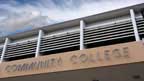
Many community colleges offer combined real estate agent and broker courses, ranging from $600 to $5,000. In addition to certificate courses, some offer associate's degrees in real estate (see How Much Does a Community College cost for more information). The Los Angeles City College[2] offers real estate education approved by the California Department of Real Estate for agents and brokers for about $600 for in-state residents.
Many state universities also offer agent and broker training. Real estate pre-license courses are often integrated into a school's general business degree or MBA curriculum (see education.costhelper.com/college.html>How Much Does College Cost for more details). Extension real estate licensing courses are also available $500 to $2,000 or more. UCLA Extension[3] costs $960 for real estate agent pre-licensing course and $1,440 for a real estate broker training course.
For-profit schools offer broker and agent/salesperson courses for $100 to $1,000 or more. For example, the California Brokers Institute[4] charges $497 for seven, three-hour classes in real estate principles.
Correspondence or online real estate licensing courses cost $150 to $1,200 or more, depending on state and the depth of study. Some courses include additional exam preparation training and materials, including practice tests. The American School of Real Estate Express[5] offers broker and agent courses for several states, ranging from $150 to $650 in California, and $150 to $1,350 in Florida.
State licensing fees vary according to state, from about $200 to $300 and are renewed every one to four years. In California, for example, the licensing fee is $245 for an agent/salesperson and $300 for a broker, valid for four years.
According to the US Department of Labor[6] , real estate training should cover basic state real estate transaction requirements and all the laws affecting the sale of property.
Advanced courses offer training in mortgage financing and property development and management.
Most states require 30 to 90 hours of classroom instruction for an agent's license and 60 to 90 hours for a broker's license, plus a specific amount of experience selling real estate, usually one to three years.
For brokers intending to open their own real estate offices, training should also include business courses such as marketing and accounting.
Additional costs:
The cost of books and supplies varies depending on the program. Many online and correspondence courses include all books and materials in the cost of the course. Community colleges, universities and for-profit schools usually require students to purchase books separately. Most courses require two or three real estate textbooks. These and exam preparation guides cost $20 to $50 or more each.
Membership in the National Association of Realtors[7] is available with a variety of designations. Membership dues are assessed by the local association and can cost between $50 and $100 per month.
Discounts:
Financial aid opportunities are available from most community colleges and universities. Check their websites for eligibility and application requirements.
The College Board[8] offers information on financial aid.
Shopping for real estate school:
Check local real estate associations and state government websites[9] for fees and licensing requirements. Some state websites also provide a list of approved training courses, such as the California Department of Real Estate[10] .
The American Association of Community Colleges[11] offers a national directory of community colleges.
The American Association of Colleges and Universities offers an online list of state colleges and universities.
The American School of Real Estate Express[12] offers a selection of online agent and broker licensing courses.
7 Lesser-Known Discounts for the 50+ Crowd As they age, members of the Baby Boomer generation don't like to admit that they're senior citizens, but they love getting discounts. It's kind of a quandary, because some of the best deals available are reduced prices for older folks. || Posted October 21 2013
7 Ways to Stretch Your Reduced Food Budget End of the year budgets are tight for everyone, especially in this economy.It's especially hard for the millions of Americans who depend on government programs like food stamps to help make ends meet. || Posted November 11 2013
CostHelper is based in Silicon Valley and provides consumers with unbiased price information about thousands of goods and services. Our writers are experienced journalists who adhere to our strict editorial ethics policy.
CostHelper Community
UTI urgent care visit Paid: 147.00 Visit was $135. Antibiotics was $12. Waiting for four hours in the waiting room and the visit was quick... [more]
Spanish Medical Interpreter Paid: 150.00 I worked with SynShyne Services out of Monroe, NC. They were so worth the price! Professional, friendly, accurate, great attitude and always on time. I recieved an itemized report after every contact and a user friendly invoice weekly... [more]
Skin prick allergy test Paid: 573.00 Took my 9 yr. old in after an allergic reaction to eggs. Several panels for nuts, fish & top 8 allergens. Sure enough, egg came up. Got a script for epinephrine and left... [more]






 Post
Post